Looking at tree bark patterns

With my tree identification group, I have drawn leaves, pinecones, seedpods – but in winter sometimes these are not available.  So today we met in Peckham Rye Park to investigate how to identify trees from the pattern of their bark.  We also did some rubbings, using wax crayon on paper.  Later, at home, I added some watercolour washes.  I liked the patterns, so here are some images:


From top to bottom, left to right: Oak, Turkish Hazel, Japanese Cherry, Copper Beech, Dawn Redwood.

Experiments with collage and texture

img180

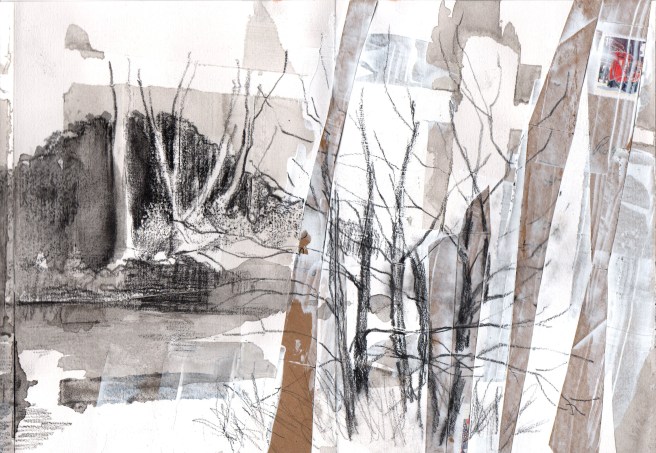
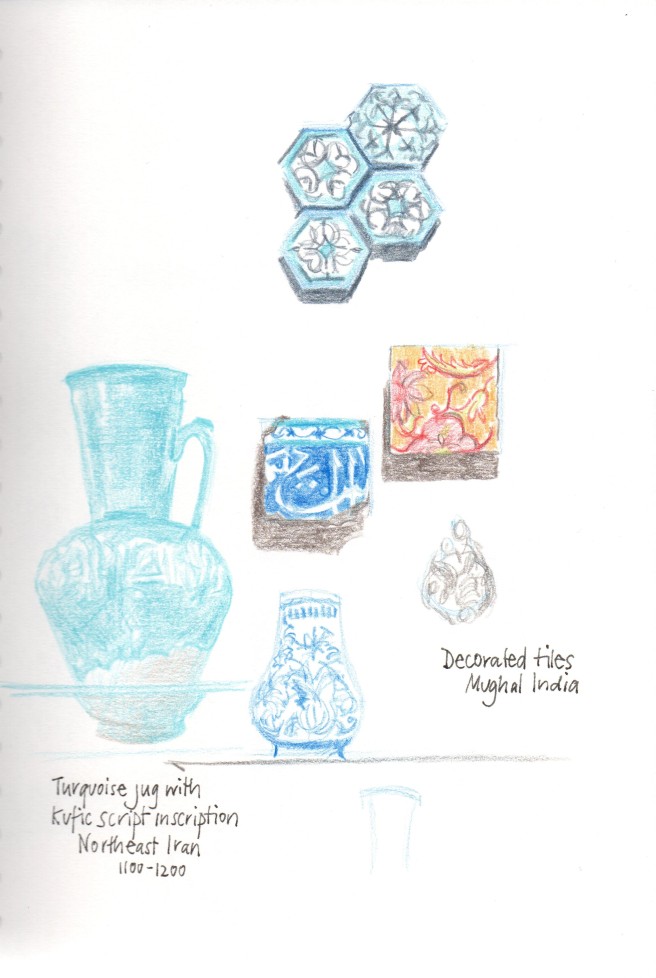
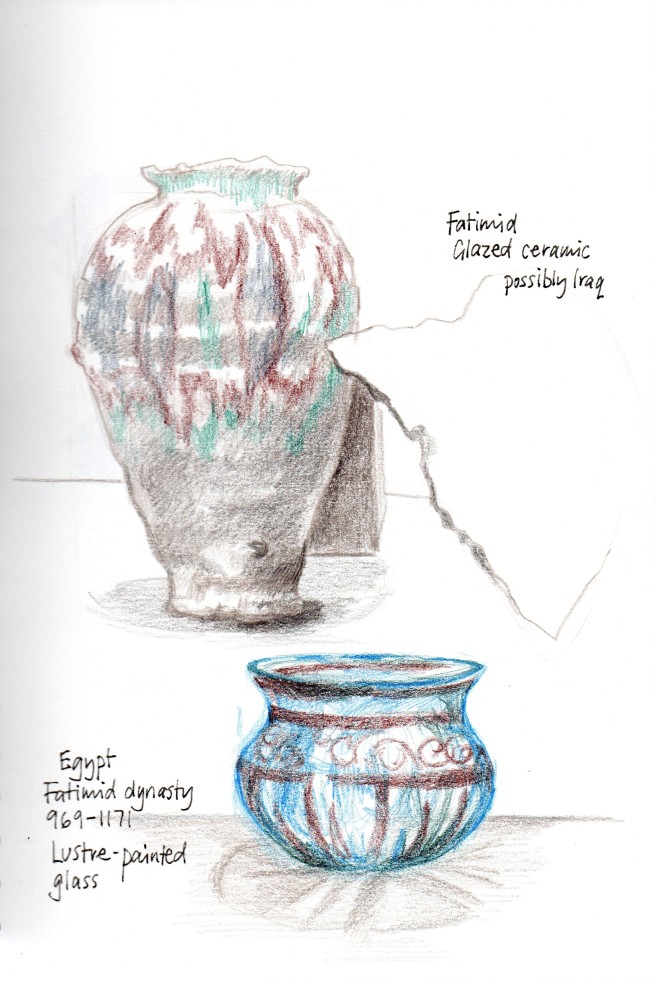
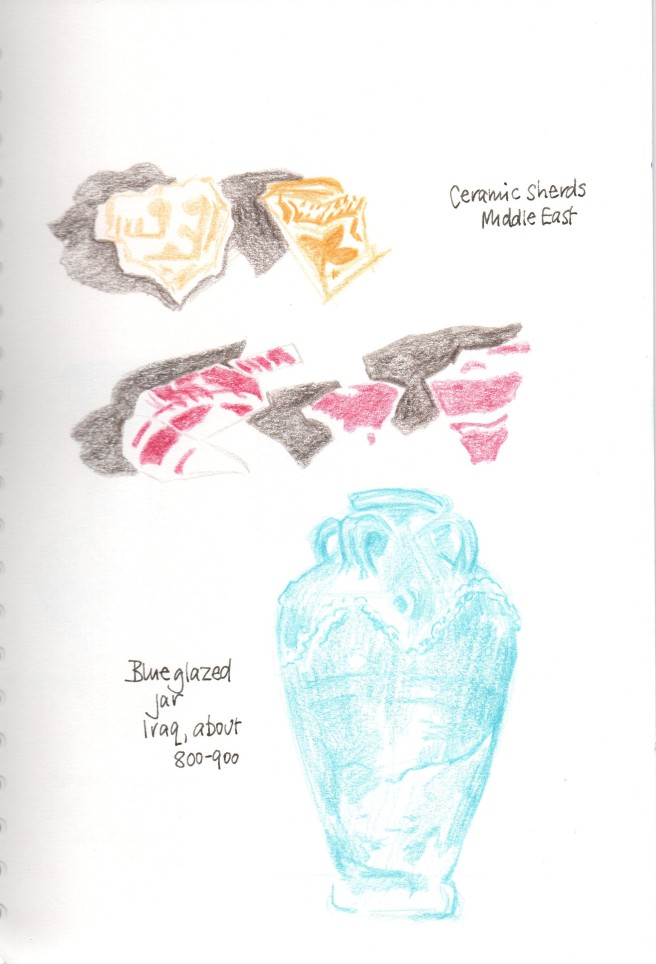
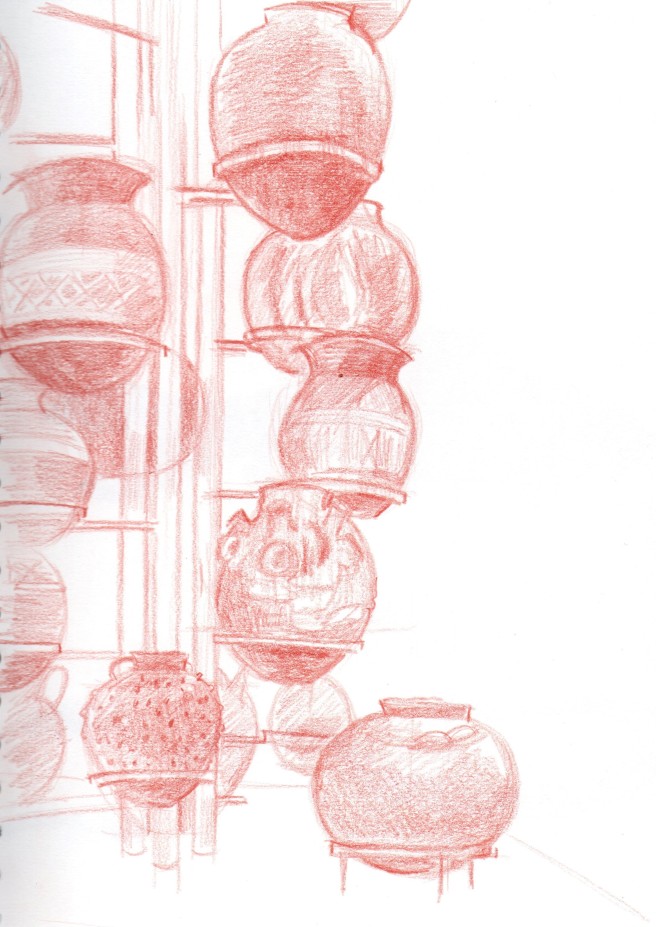
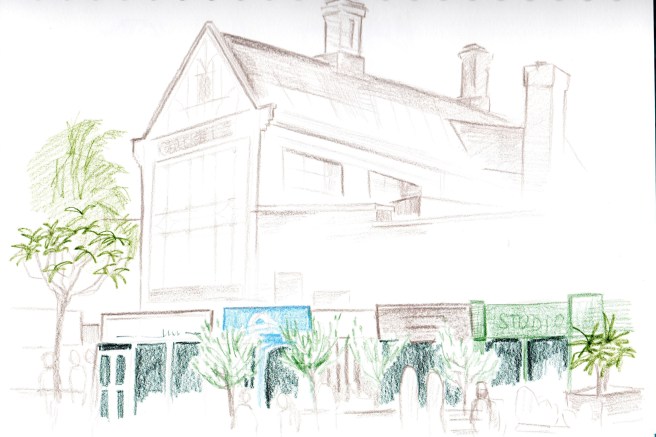
Recently, I have been experimenting with a new, mixed media approach to my drawing.  Using a concertina sketchbook, I first prepare backgrounds with ink or watercolour, collage, and acrylic gesso.  Then, on location, I add drawing, and I have been experimenting with different pens and pencils.  Here are some examples, drawn in Dulwich Park, at the British Museum, at Kew Gardens, and on a recent meet-up of Urban Sketchers London, at the Barbican.

Drawing trees

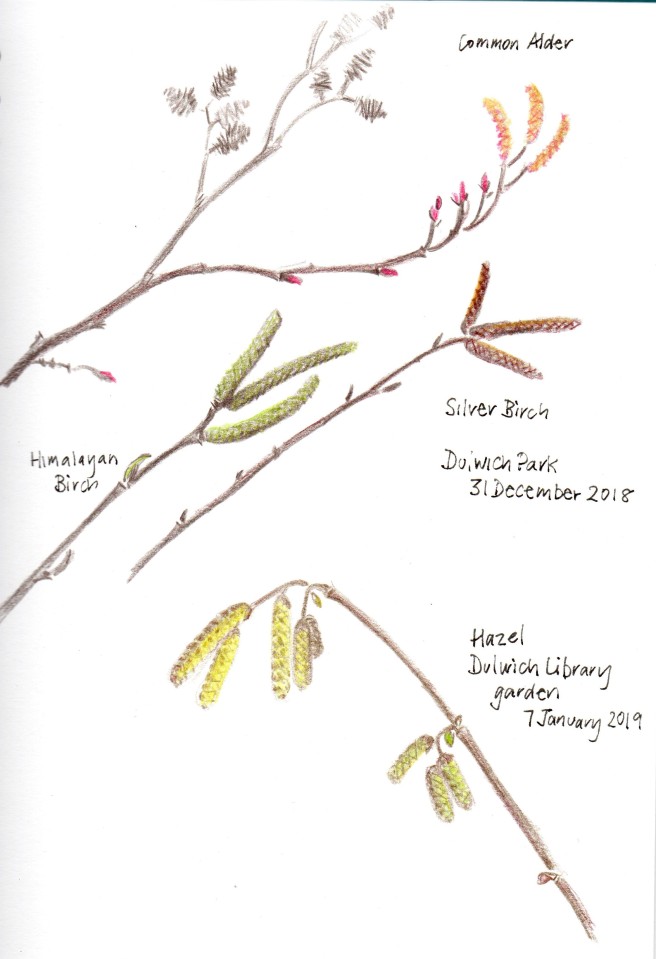
For some months, I have been part of a U3A (University of the Third Age) group learning to identify different types of tree.  We visit parks in the Dulwich area and also look at street trees, which are surprisingly varied.  Drawing from tree specimens at different times of year helps to improve observation and memory.

This week I have been looking at catkins, one of the most familiar signs of approaching spring.  The Himalayan birch has a brighter white bark than the more familiar silver birch, and is frequently being planted as a street tree in this area.
img174

Hidden histories

img069

One of the benefits of urban sketching is that it provides a reason to explore the hidden corners of London.  Urban Sketchers London visited Three Mills Island to draw in May 2018, and for many of us it was a place we had never previously visited.

The House Mill and Clock Mill are tidal water mills on the River Lea in East London. There have been watermills on this part of the River Lea since the eleventh century – the Doomsday Book of 1086 records eight mills. The River Lea flows into the Thames and is part of the same tidal system; tidal mills use the flow of water to power the grinding of wheat into flour, and other purposes. The name ‘Three Mills’ was in use by the twelfth century; the mills ground and sold bread flour to local bakers. Grain was brought to the mills by carts or by barge from farms in Suffolk, Essex and Hertfordshire. Standing by the mills, you can see the tramways in the ground used by the grain carts.

The House Mill we see today was built in 1776; the Miller’s House adjoining it was rebuilt in the 1990’s to the original 1763 design after damage from Second World War bombing. The Clock Mill was built in 1817, replacing a timber-built mill. The clocktower is retained from the 1750s; the clock and bell summonsed the local people to work at the mills. These two mills have waterwheels under the buildings which would have driven the millstones. The buildings with conical roofs were used to dry grain.

My drawing above of the Clock Mill is a monoprint, based on an earlier location drawing.

About Urban Sketchers London

Urban Sketchers London is part of an international network of groups who tell the story of the places where we live through location drawing.  In London, we meet monthly in different locations, and there is information about this on our Urban Sketchers London blog.  Here are some of the drawings I have done during 2018.

The first was done in January 2018 at the Wellcome Collection, a gallery with innovative displays about the history of medicine.img017

img070

Above is a drawing is of St Dunstan-in-the-East, a ruined church in the City of London which is now a small garden.  The drawing below was done at Gabriel’s Wharf, on London’s South Bank.

img102


Welcome to my blog

This blog shows you some of my drawings and paintings.  I draw on location in London and elsewhere, as well as developing studio drawings, paintings and prints.  I am involved in Urban Sketchers London and help to run meet-ups so sketchers can get together, explore London, and draw.  More information about Urban Sketchers London is available on our blog.  I also am interested in exploring the history of London.  I hope this blog will also evolve into other areas of interest.